Saturday, April 27, 2013

Bhutan leads the way

I came across this article from NPR recently:

A Bhutanese farmer puts her harvest of chilies on the roof of a shed to dry and protect it from wild boars, deer, and monkeys in 2006.
http://www.npr.org/blogs/thesalt/2012/07/31/157645902/bhutan-bets-organic-agriculture-is-the-road-to-happiness (photo from article)

Bhutan has pledged to become a 100% organic country, banning the use of all synthetic fertilizers, pesticides, herbicides, etc.  Although there is some opposition within the government, I am impressed that they are even having this conversation.

And it turns out that Sikkim State in India is also on track to be 100% organic by 2015.


Wednesday, April 24, 2013

Support your local farmers!

My family is so lucky to live in a heavily agricultural state, and this year I have seen more farmer's markets than ever in the Atlanta metro area.  I am excited to visit as many as possible and enjoy fresh vegetables all summer long.  Here are a few tips that I have learned over the years (the hard way).  Maybe you all are much smarter than me, but it has taken me some time to be a savvy shopper at farmer's markets and produce stands.  Trial and error seems to be my modus operandi.
1.  Be careful of roadside stands, especially this time of year.  Often the produce they are selling is not grown locally and is not organic.  I have seen lots of "hydroponic" tomatoes from Florida and California at roadside stands in Georgia, and lots of peaches from California, Alabama, or South Carolina sold at stands in the Peach State.

2.  Look around the sales table and note whether there are produce boxes with name brand labels, it may be a clue that the produce you are buying is not local.

3.  Ask whether the person selling the produce actually grew it.  They're usually honest about it.

4.  Locally grown produce is usually smaller in size than mass-produced food.  That's okay with me, it means its real.

5.  Smell it, squeeze it, and check the bottom of the basket for rotten items.

6.  Locally grown produce is usually dirtier and dingier than produce in the grocery store, so it will need to be washed.  That's also okay, because it was grown this year and it hasn't been gassed or submerged in chemical baths to keep it fresh.

7.  If you want organic, be sure to confirm with the seller.

8.  Ask questions and talk to the seller or the farmer - you'll usually learn something and have a better buying experience.

9.  This one is hard for us:  go early.  The best produce at a farmer's market goes first, and the early birds do get the best items.  Even if I have arrived late, I don't usually get discounts for buying the last items available.

10.  Don't be a sucker.  Last year I wanted fresh sweet potatoes badly, and ended up paying $1.00 for a tiny little potato!  Darcy enjoyed it, but looking back, it wasn't worth my $1.00.

Lastly, my goal for this year is to try to cook with new vegetables, so I plan to look for items that our family doesn't normally eat and making menus starting with those ingredients.  If that doesn't work out, I'll be happy with tomatoes every day.  

To find a farmer's market near you, try the internet!  Atlanta Magazine has a great guide for our area:
http://www.atlantamagazine.com/guides/localfoods/browse.aspx


I couldn't resist:    


Monday, March 18, 2013

Wednesday, March 13, 2013

Small Oil from Small Farms

Oil.  When you hear that word, do multi-country corporate conglomerates pop into your head, reminding you of oil spills, high gas prices, and sandy places?  Well, this post has nothing to do with big oil, it's about the 1/4 cup of cooking oil you may use in one recipe - let's call it "small" oil.  Where does that come from?     

Last month it was brought to my attention that cooking oil is commonly made from GMO plants, such as corn, canola, soybeans, etc.  Even plain old vegetable oil is not exempt from containing GMOs, to my surprise and dismay.  The lesson again is that GMOs are everywhere, they keep showing up in common foods that I thought were "safe"!

Since that time I have been thinking about how to get rid of this "hidden" GMO in my family's diet, including finding an oil that is typically not GMO, possibly one that is already on my conventional grocery store shelf.  I really like canola oil, but I thought I may even need to switch oil types.  We use oil for all sorts of things including baking mixes, cakes, sauteeing, frying, etc. so I needed something that was versatile.

Last night I found my own solution that tics some important boxes to me:  non-GMO, locally owned and processed, and sourced from small farmers in our region.  Solio Family Canola Oils are made from canola plants grown on small farms in Georgia, Florida, Tennessee, North Carolina, and South Carolina.  Apparently it's brand new (the website is still under construction) but I was impressed that the cost was the same as the health food store's own generic brand product that contains GMOs.  I'm looking forward to trying it out, and I can't wait to post the results.


                                                Solio Family Canola and Sunflower Oils  

Tuesday, December 25, 2012

Sustainable Crops I

It is naive to believe that our actions do not affect others.  That includes things that you do on your property, which can and do affect others, even thousands of miles away.  Although I subscribe to the idea of  freedom to do with your property as you see fit, I also believe that we should take care of what we have for the next generation.  One of the best examples of far reaching consequences is the impact of growing more corn in the Midwest to meet ever increasing demands.  An increase in this crop has resulted in a massive influx of fertilizer into the Mississippi Delta brought downriver from farms in the Midwest, which has created a "deadzone" where there is little or no oxygen in the water, and wildlife cannot survive.  No wildlife means no seafood crop for fishermen in these waters.

In my humble opinion, corn is one of the most important crops on the planet.  It is a huge cash crop; we can find corn in many products, from high-fructose corn syrup as food sweeteners to ethanol for cars.

While I am amazed at science's ability to find so many uses for a plant, and that must be considered to be better on our environment than a synthetic alternative, our growing reliance on corn has caused some disturbing trends.

First, we are becoming more dependent on a few crops instead of maintaining a diverse food supply.  This year when the Midwest was struck by a drought, the all-important corn crop suffered and I predict we'll see increases in the price of many products as a result.  So much food and many other products use corn.  It is unfeasible to find an adequate substitute when faced with a corn shortage.  Right now ranchers cannot afford the corn feed for their cows, so they are feeding their cows gummy bears, stale candy, and chocolate bars to make up for it.  http://www.radioiowa.com/2012/09/27/cattle-producers-use-cast-off-food-products-to-help-supplement-feed/

Corn in Kansas "twists" because of drought.

Next, using corn for other products takes it away from our food supply and creates greater demand for the crop.  That also goes for Third World countries who depend on the import of U.S. corn.

Corn is a crop heavily dependent on fertilizer.  Greater demand for the corn crop and rising prices encourage more farmers to grow it, which in turn increases the amount of fertilizer used.  Oh, and by the way, don't forget that most corn grown in the U.S. is a GMO.

More fertilizer for the corn crops of the Midwest means more runoff into our streams, lakes, rivers, and eventually the Gulf of Mexico, which has not had such a good run the last few years.  Deepwater Horizon Oil Spill, anyone??  Evidence of our dependence on corn can be found in the Gulf of Mexico's "dead zone".  Cause and effect:  growing one food crop has killed another one downriver.   (There are other crops that also have this effect - they all use up lots of nutrients in the soil and needs lots of fertilizer.)

It seems that once again a solution for one problem - a cheaper food supply and a new, renewable fuel source, has created a different problem with long-lasting effects.

Credit:  http://serc.carleton.edu/microbelife/topics/deadzone/advanced.html.  Hypoxic zone in the Gulf of Mexico. The brown water is enriched in nutrients and sediments from the Mississippi River. Algal blooms from the enriched water create the hypoxic zone. Image courtesy of Nancy Rabalais (Louisiana Universities Marine Consortium) and can be found on the Southern Regional Water Program web site.

Monday, November 19, 2012

How do you eat Thanksgiving dinner without becoming a butterball?

Thanksgiving is one of my favorite holidays.  Besides seeing my family, it usually gives me the opportunity to get into the kitchen and cook on a grand scale.  I love making both the tried and true dishes, such as Waldorf Salad that my Mama insists on, as well as trying out new recipes.  This year I might try a roasted red cabbage salad:  http://www.thekitchn.com/recipe-roasted-cabbage-slaw-with-hazelnuts-lemon-recipes-from-the-kitchn-178256 (thanks to Jessica C. for sharing the recipe!).  Even though Mama's menu is set, I think I can get her to add one more salad if we have time to make it....

With all that food comes a little apprehension about whether my clothes will fit the next day.  Most of us don't eat the way we used to, and I certainly don't serve that much food on a nightly basis in my home.  In addition, my metabolism isn't what it used to be, and I know I can't allow myself to eat everything in sight, unlike the good old days of skinniness.  So, what to do?

This year I am going to try planning ahead.  I suppose you can call it eating in moderation.  I have made a few boundaries for myself to get maximum enjoyment with a minimum (notice I didn't say small or tiny) amount of calories.

1.  Pre-dinner:  Slim down my recipes.  Since I get to help cook, I'll try to use low fat ingredients instead of full fat, as long as the flavor is still there.  That Waldorf salad is definitely going to have low fat mayo.  Our all natural turkey will be grilled instead of slathered with butter and baked.

2.  At dinner:  I am only going to taste the food that I really enjoy, look forward to, or want to try.  It is even easier if the food is served from a buffet instead at the table.  At all the Thanksgivings that I attend, there is so much food that there isn't enough room on my plate to try each dish, even with small helpings.  So, since I don't really like a particular dish that is always served, I'll skip it.  There is no need to get additional calories from something I don't even want to eat.

3.  Avoid the bread.  I love bread, but unless it is homemade bread that I really love or that was made especially for me, I'm going to try and skip it.  I can eat bread any time I want, so I'm not going to fill up on those calories on Turkey Day.  By the way, dressing is not considered bread in my book.

4.  Get small portions.  Just in case that casserole I've been dreaming of didn't really turn out well this year, I don't have a huge amount on my plate to eat.

5.  Drink water instead of sweet tea.  This is for others, I'm going for the tea with real sugar.  It's a treat.

6.  Don't eat a big breakfast.  I'm saving my calories for the special meal later on.

7.  Pick a favorite dessert and only eat one slice.  I'm not sure I can only eat pumpkin pie if there is also a pecan pie staring at me, but I'll give this idea a shot.

8.  Go for a walk.  I hope to be able to get outside after dinner and move around a little bit, so that I won't feel so guilty about leftovers later that night.  Perhaps chasing my 2 year old will also do the trick?

9.  There's always leftovers!  I can get to try something again at home on another day, so no need to overload myself at that one meal.

If you have any tried and true techniques to get the most satisfaction during your Thanksgiving Day with less fattening results, please share them!


(This is one of several buffets we had one Thanksgiving; there wasn't enough room on this enormous sideboard for all the food.)


Sunday, November 11, 2012

Turkey Time

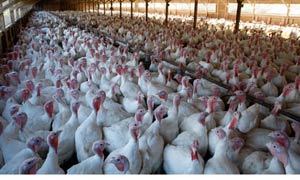
Thanksgiving is coming and we are all giving some attention to where we will be and what we will be eating.  If you are going to have the traditional Thanksgiving feast, have you thought about where you will be purchasing your turkey?  Some of you have already bought a frozen turkey from the grocery store and have it safely in deep freeze.  But, for those of us who haven't gotten there yet, there are now other options.  These days you can easily find a fresh turkey (uncooked), or even order one from a restaurant or other organization already cooked.  For the fresh turkeys, they can be conventional, natural (I usually think of this as no additives or preservatives), or even organic (just the turkey, ma'am - no hormones, antibiotics, GMOs in their feed, etc.).  Many health food stores are taking orders for your fresh organic turkey right now, and the prices are not that bad.  I've heard a price range of $4.00 per pound and up.  You can then pick it up the day before Thanksgiving and not worry about defrosting your bird in the refrigerator for days.  If you are lucky enough to have a free range turkey farm near you, they may sell one to you directly, eliminating the middle man.  Each year we usually order a smoked turkey from a barbecue joint, but I'm sure it's probably conventional.  I'm not so excited about it this year, but maybe my solution is to ask around - perhaps there's a delicious organic smoked turkey out there for us.   Do happy turkeys taste better?

(Conventional factory farm)

(Free range farm)